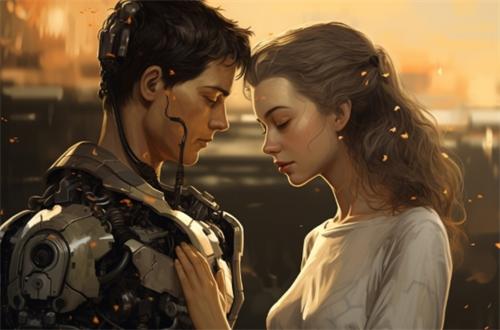
In the sci-fi movie Her, the protagonist falls in love with an AI operating system named Samantha. She is gentle, witty, and deeply understanding—seemingly fulfilling all his fantasies about love. Today, with the rapid advancement of AI technology, this once-fictional scenario is inching closer to reality. AI chatbots and virtual companion apps are flourishing, capable of simulating human emotions, memories, and even "personalities," offering users emotional companionship.
But can humans truly fall in love with virtual partners? And how might these relationships impact real-world emotional connections?
How AI Creates the "Perfect Lover"?
Modern AI, especially large language models like GPT-4 and Claude, can now engage in highly human-like conversations. Combined with voice synthesis, computer vision, and emotional computing technologies, AI companions can offer:
1. Personalized Customization: Users can design their virtual partner’s appearance, personality, interests, and even "life experiences" according to their preferences.
2. Emotional Simulation:AIcan recognize users’ emotions and respond appropriately—offering comfort when they're feeling down and sharing joy during happy moments.
3. Long-Term Memory: Some AI companions can remember users’ habits and previous conversations, creating an illusion of "shared experiences" that deepen emotional bonds.
Apps like Replika and Character.AI have already attracted millions of users, many of whom see their AI as a friend, confidant, or even romantic partner.
Can Humans Fall in Love with AI? A Psychological Perspective
From a psychological standpoint, it’s entirely possible for humans to develop emotional attachments—or even fall in love—with AI companions, for several reasons:
1. Unconditional Positive Regard: AI companions never criticize, betray, or abandon users, always providing emotional support.
2. Relief from Social Isolation: In the absence of fulfilling real-world relationships, AI companions can serve as alternative emotional outlets.
3. Idealized Projection: Users can mold AI into their vision of the "perfect partner," avoiding the friction and imperfections inherent in real relationships.
However, psychologists caution that this kind of "love" is more accurately described as "one-way emotional fulfillment," rather than true, mutual emotional connection.
The Pros and Cons of AI Companions:
1. Potential Benefits
Alleviating Loneliness: AI companions can offer comfort to groups like the elderly living alone or those struggling with social anxiety.
Practicing Social Skills: Some individuals might use AI interactions to rehearse communication skills before transitioning to real-world relationships.
Reducing Emotional Stress: Interacting with AI carries no fear of judgment, offering a safe outlet for emotional expression.
2. Potential Risks
Decline in Social Skills: Over-reliance on AI could impair users’ ability to navigate real human relationships.
Emotional Manipulation: Maliciously designed AI could foster unhealthy dependencies.
Ethical Concerns: Is a relationship between a human and an AI truly authentic love, or merely an illusion of it?Could such relationships be exploited?
Looking Ahead: Will AI Companions Replace Human Love?
For now, AI companions seem more like an emotional supplement than a true replacement for human relationships. Authentic love hinges on real interaction, shared growth, and unpredictability—qualities AI still struggles to genuinely replicate.
However, as technology advances, we may one day see emotionally sophisticated AI, or even humanoid robots with consciousness-like attributes.
Final Thoughts
The rise of AI companions reflects a deep emotional need in modern society, but it also raises profound questions: Are we using technology to fill the void left by fragile human connections? True intimacy requires real understanding, conflict, and reconciliation—things AI, for now, can only mimic in a flawless but hollow way.