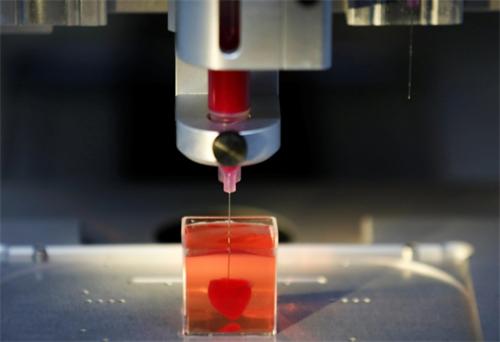
In 2023, Israeli scientists successfully transplanted a 3D-printed artificial heart into a rabbit, allowing it to beat normally for several hours. This groundbreaking achievement has excited the global medical community and brought the topics of "artificial organs" and "immortality" back into the spotlight. Can 3D printing technology solve the organ shortage problem once and for all? How far are we from achieving "immortality" through technological means?
3D-Printed Heart: How Is It Achieved?
The core technology behind 3D-printed hearts is bioprinting, a process that uses a patient's own cells as "bio-ink" to construct functional heart tissue layer by layer. The specific steps involved are:
1. Cell Collection: Fat or stem cells are extracted from the patient's body and cultured in the laboratory to multiply.
2. Bio-Ink Preparation: The cells are mixed with biocompatible materials (such as hydrogels) to create a printable "ink."
3. 3D Printing: Based on precise CT or MRI scans of the patient's heart, a vascular network, myocardium, and valve structures are printed.
4. In Vitro Cultivation: After printing, the artificial heart is cultured in a bioreactor to mature the cells and enable them to contract.
Currently, 3D-printed hearts are still in the experimental phase, but scientists have successfully printed miniature heart models and observed short-term survival in animal experiments.
Advantages of 3D-Printed Organs:
1. Solving the Organ Shortage Problem
Every year, millions of people die waiting for a suitable organ transplant. 3D printing can create organs on demand, completely eliminating the dependency on donors.
2. Reducing the Risk of Rejection
By using the patient's own cells, the risk of immune rejection is significantly reduced, and patients won't need to take long-term immunosuppressive drugs after surgery.
3. Personalized Medicine
3D printing allows for organs to be customized based on a patient's anatomy, such as printing a heart that perfectly matches the size needed for children, eliminating issues with mismatched organ sizes seen in traditional transplants.
Challenges and Limitations:
1. Vascularization Problem
The heart requires a complex vascular network to supply oxygen and nutrients, but the current printed vascular structures are unable to fully replicate the natural microcirculatory system of a real heart.
2. Cell Maturation
Laboratory-cultured cardiac cells have weak contractile strength and cannot yet perform as reliably and stably as a real heart over time.
3. Long-Term Survival
Currently, 3D-printed hearts can only survive for hours to a few days in animal trials, with a long way to go before achieving long-term functionality.
4. Ethical and Regulatory Barriers
The use of stem cells and gene editing in creating artificial organs raises ethical concerns, and regulatory policies around the world are still evolving.
The Connection Between 3D-Printed Organs and "Immortality":
The success of 3D-printed hearts has reignited discussions on the possibility of "technological immortality." In theory, if all failing organs could be replaced by 3D-printed ones, human lifespans could be significantly extended. However, achieving "immortality" still faces several critical barriers:
1. The Brain Cannot Be Replaced
Even if organs like the heart and liver can be replaced, the aging of the brain and neurodegenerative conditions (like Alzheimer's) remain unsolved obstacles.
2. Telomere Shortening and Cellular Aging
The number of cell divisions is limited by the length of telomeres, and simply replacing organs cannot stop the overall aging process.
3. Societal and Resource Challenges
If human lifespan is significantly extended, issues like population explosion, resource distribution, and generational conflicts could present new societal challenges.
Future Outlook: When Will Artificial Organs Become Common?
Scientists predict that 3D-printed hearts may enter clinical trials within 10 to 20 years, while simpler organs (such as skin and cartilage) could be commercialized more quickly. Potential future developments could include:
2025-2030: Widespread use of 3D-printed tissues such as skin and corneas.
2030-2040: Clinical trials for more complex organs like kidneys and livers.
After 2040: Full-function 3D-printed heart or lung transplants could become a reality.
However, even if the technology matures, the cost may still limit widespread adoption. Currently, the research and development cost of a single 3D-printed heart can reach millions of dollars, and prices will need to be reduced through large-scale production.
Conclusion
The breakthrough in 3D-printed hearts marks a significant advancement in regenerative medicine, offering hope for solving the organ shortage problem and greatly extending healthy lifespans in the coming decades. However, true "immortality" involves multifaceted challenges in biology, neuroscience, and societal ethics, and is unlikely to be achievable in the short term.